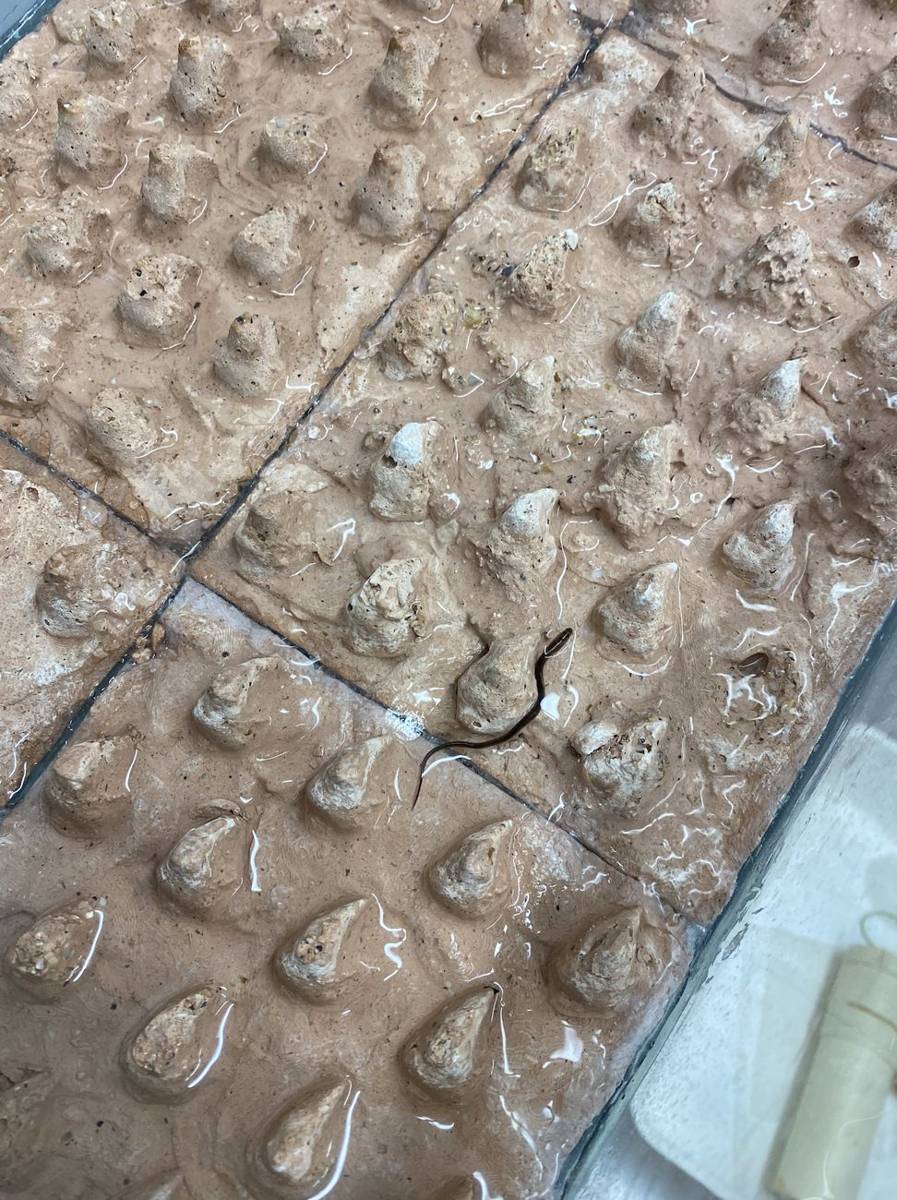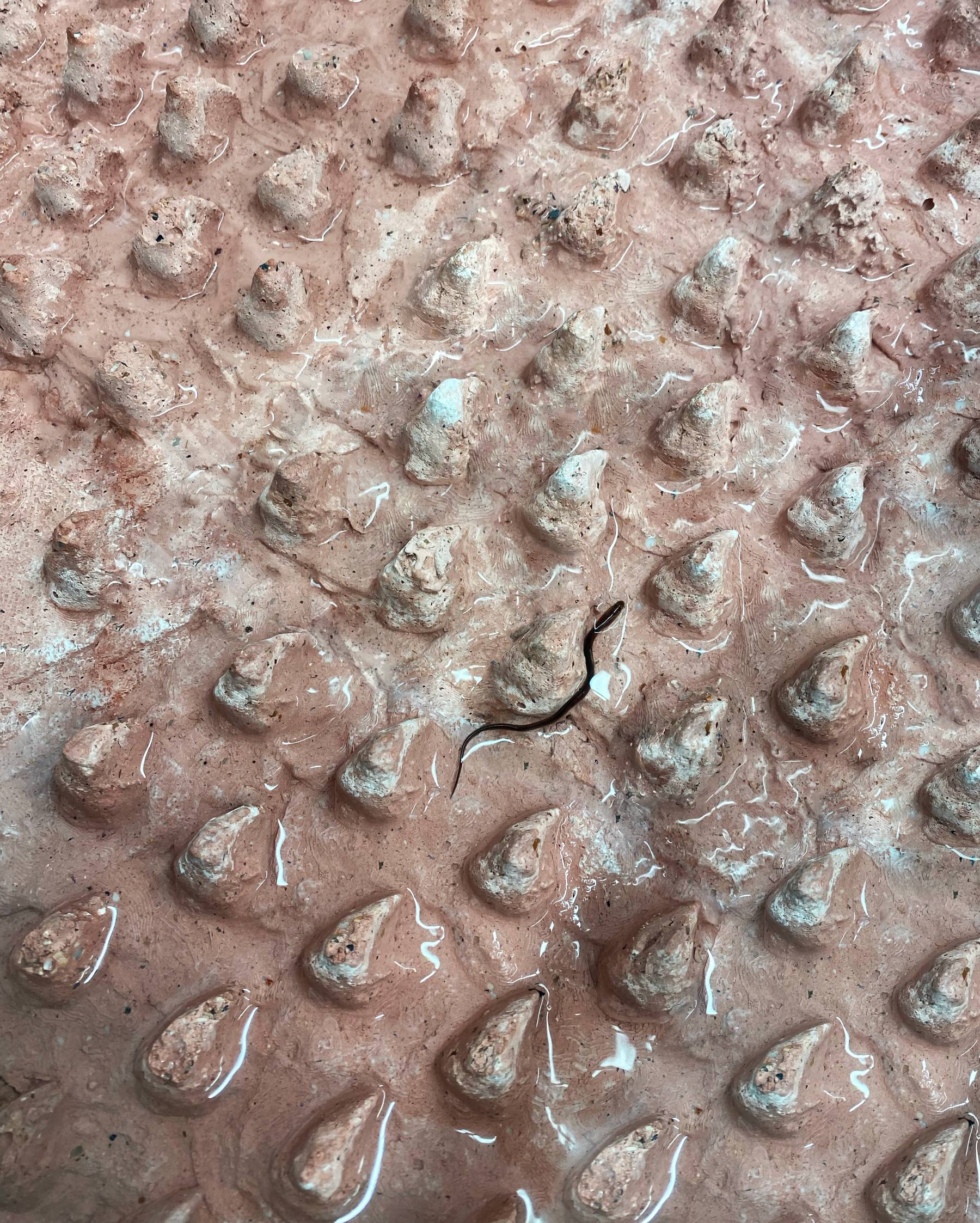

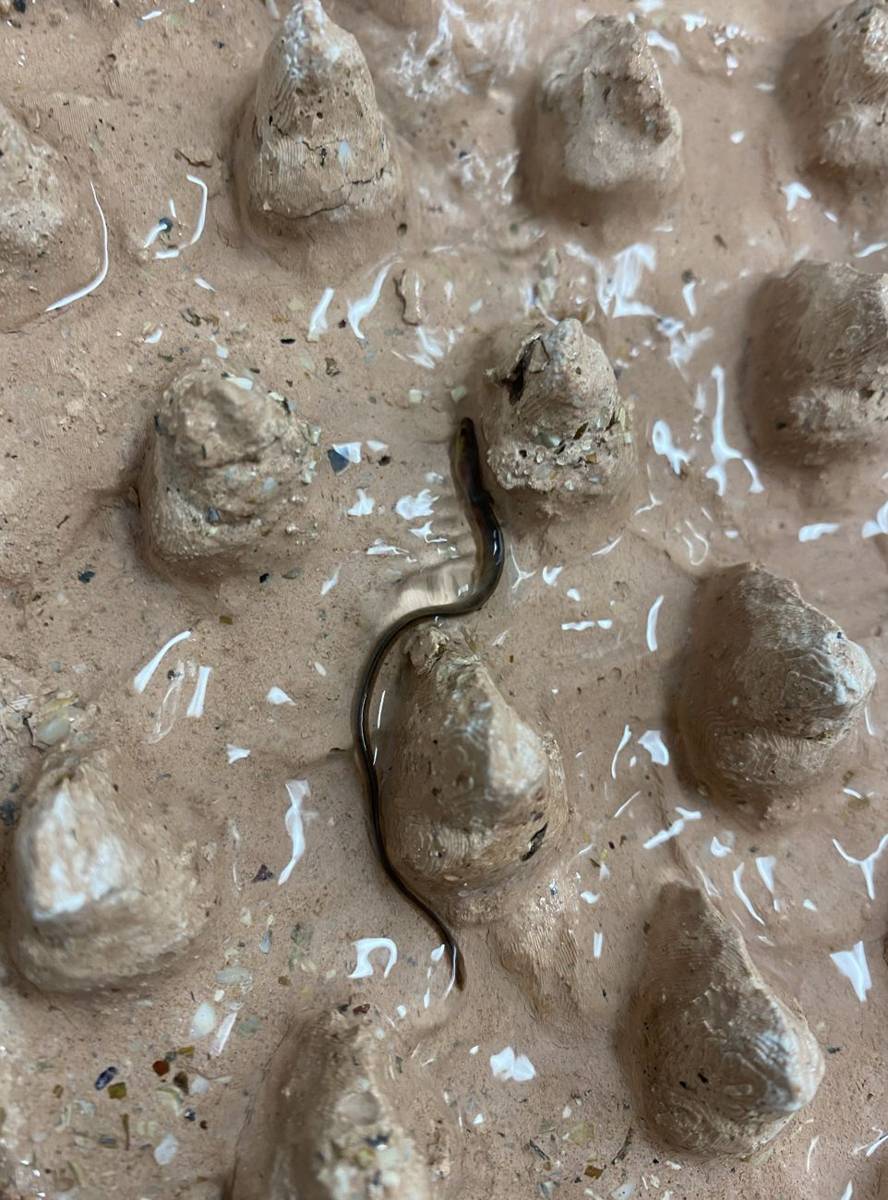
Two young eels climbing between the oyster-form studs of the pink shell-ceramic tile, with water running over it
Flo Green

A Bridge for Eels

floemilygreen@gmail.com

Index

Multispecies infrastructure for the passage of Anguilla anguilla
Field report · 2026
I.The problemIntroduction

Infrastructure has always been built for humans

This project asks what it might look like if we designed for eels

European eel populations have fallen 95% in forty years. They are blocked from historic freshwater habitat by thousands of unmitigated weirs and locks, left by two centuries of canalisation. Eels climb rather than swim; a single 30 cm weir blocks an entire cohort from decades of upstream habitat.

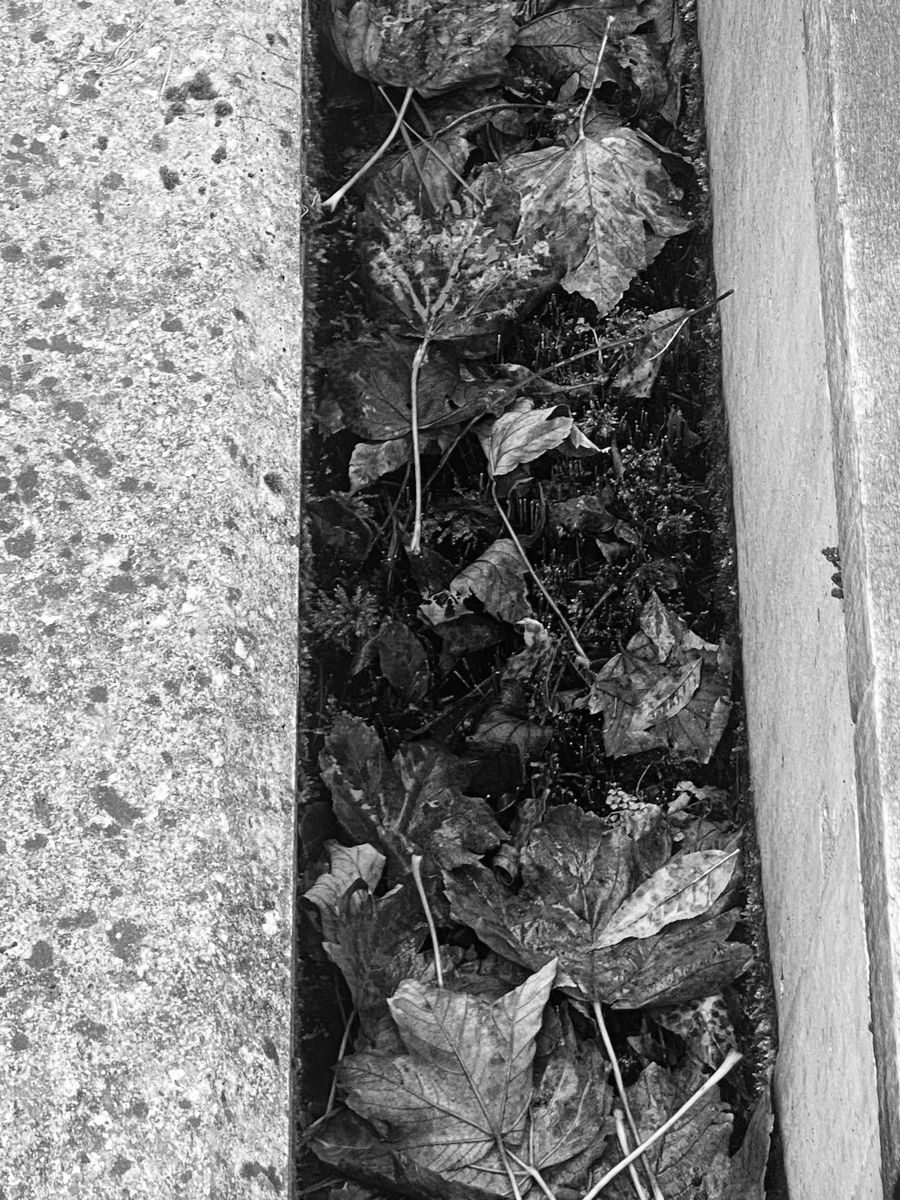
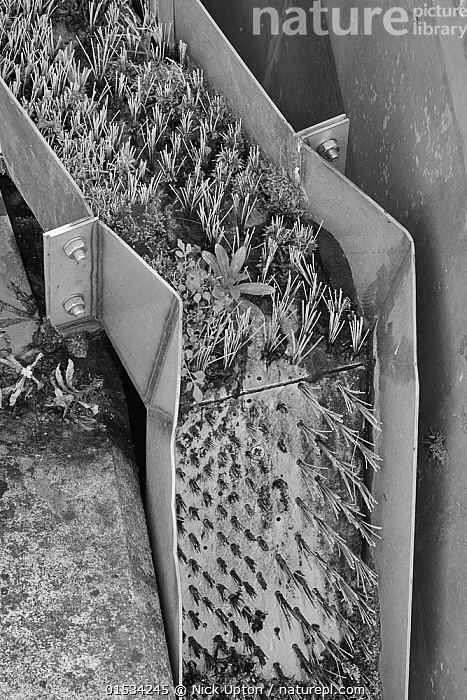
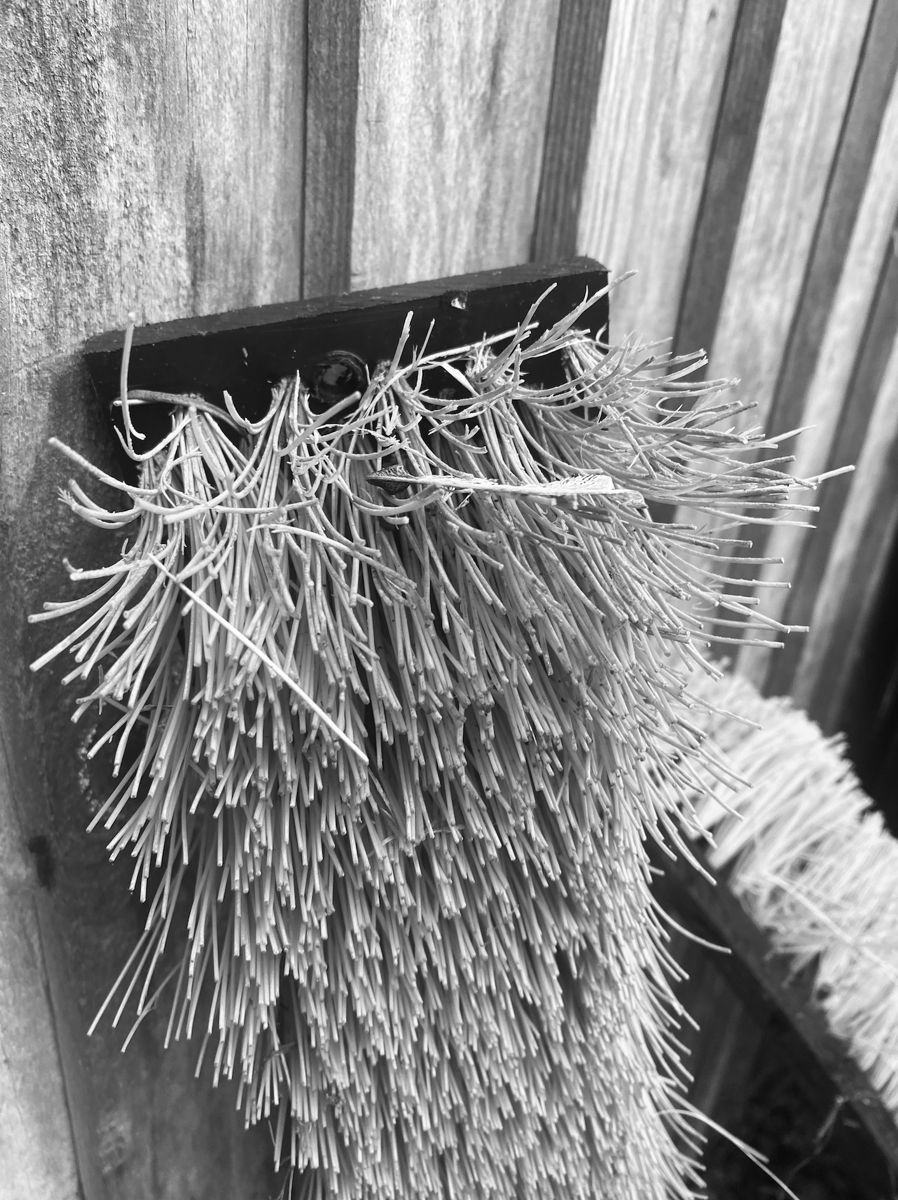
Existing eel passes put cost before ecology. In the words of one eel expert: “if they can get away with making it out of plastic, single-use plastic, whatever it may be, then that’s what they’ll go for.”

This project is grounded in a multispecies design method, which considers the needs of non-human species alongside human ones. Ecologists identify problems and define species requirements, but solutions are often handed to engineers without detailed ecological understanding. The result is standardised, single-species, rigid solutions: uniform plastic eel ladders with limited thought for behaviour.

The framework draws on Ron Wakkary’s Things We Could Design (2021), Robin Wall Kimmerer’s Braiding Sweetgrass (2013) and the Design Museum’s More Than Human (2025). It insists on specificity: one critically endangered species, on one canalised river, using one waste material stream already present in that ecosystem.
95%Fall in glass eel recruitment since 1980Wwt.org.uk, 2019
5,000kmSargasso Sea crossing on the Gulf StreamSustainable Eel Group, 2024
<1%Of drifting larvae survive the crossingBonhommeau et al., 2009
£2.5bnValue of the illegal glass eel trade. Worth more per kilo than cocaineEuropol, 2019
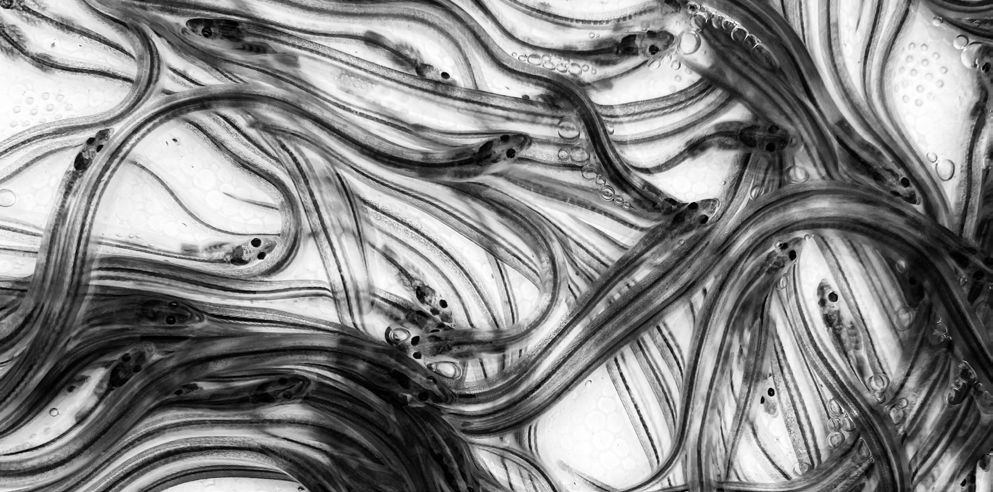
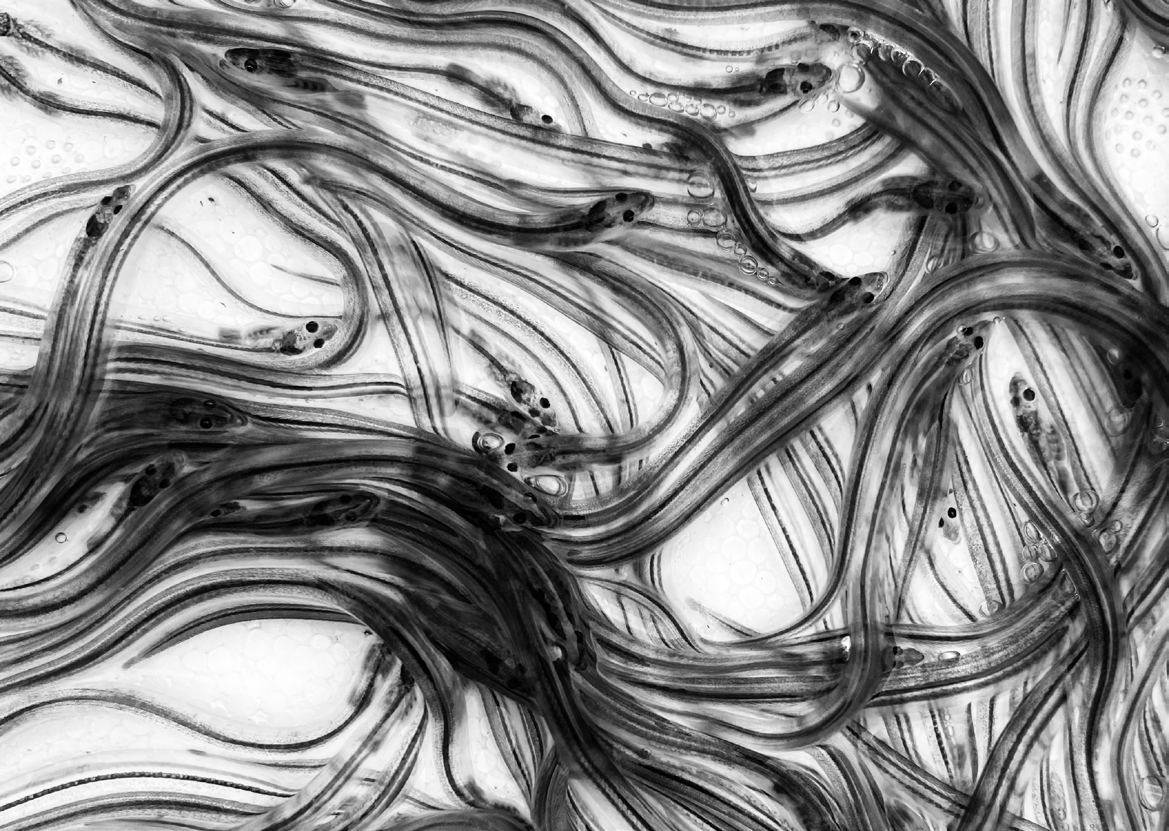
Hundreds of glass eels tangled together in a tray
Fig.2. Glass eels before redistribution on the Kennet & Avon.

What the field says

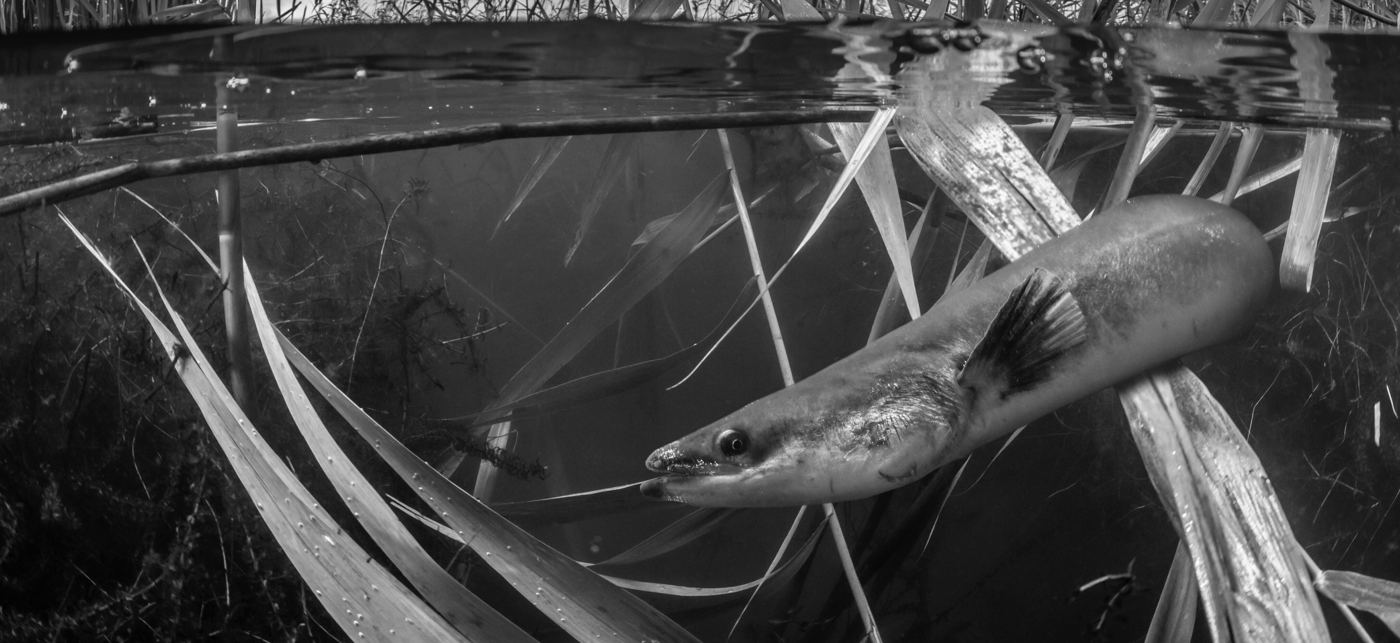
A European eel swimming through reeds just below the water surface
Fig.3. (Field, 2023)

The aim is to bridge the gap between ecology and engineering: ecological knowledge of eel behaviour, material experiments with waste-derived shell ceramics, and design-led thinking about biomimetic surfaces and modular systems. The result should be ecologically informed, adaptive and materially honest.

II.The European eelCritically endangered · IUCN Red List

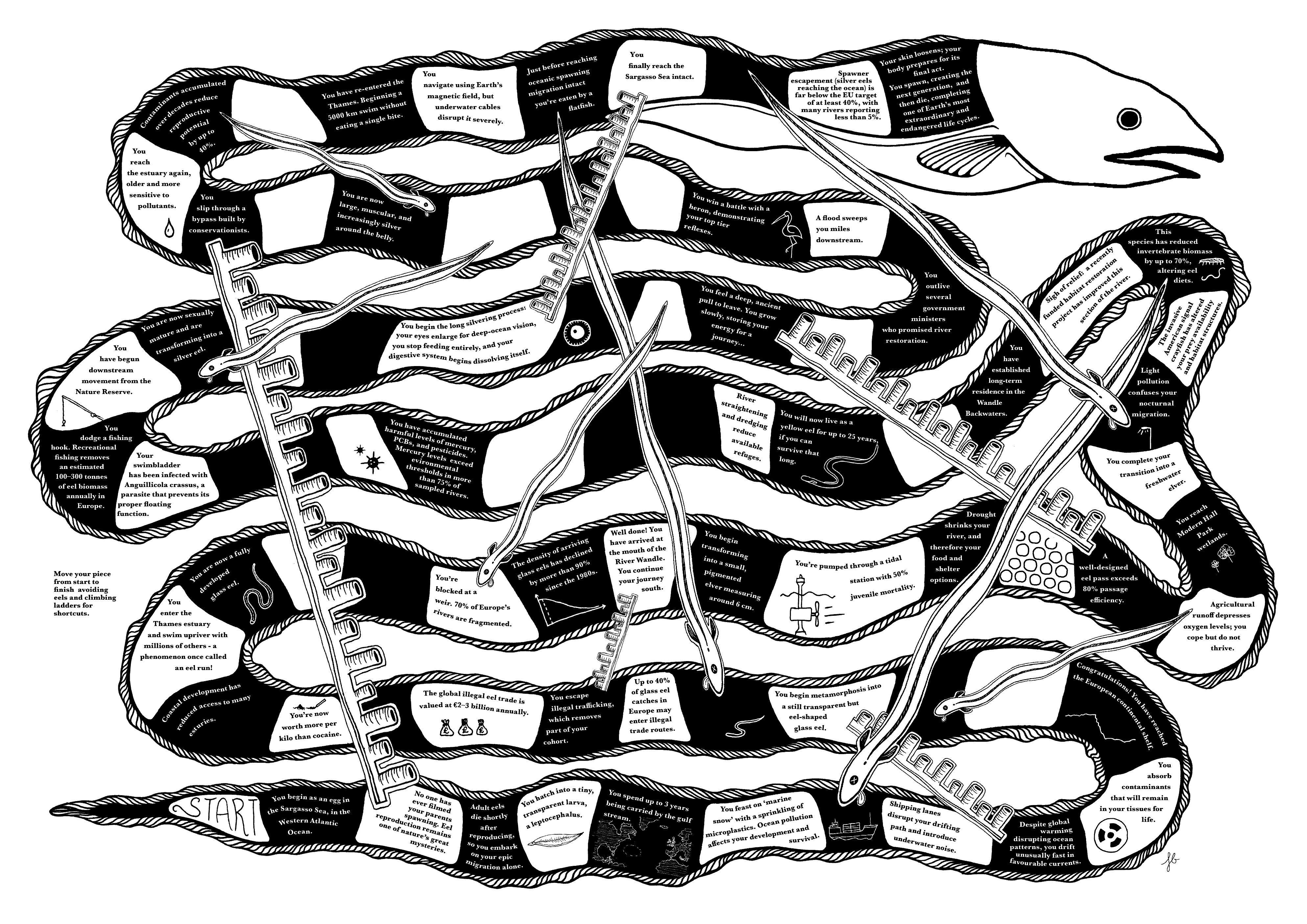
A lifecycle unchanged for millions of years

Select a stage · then add the bridge

Where
How long

Fig.1. Life cycle of the European eel. The barrier point, the weir, falls between the elver and yellow eel stages, where this project intervenes.

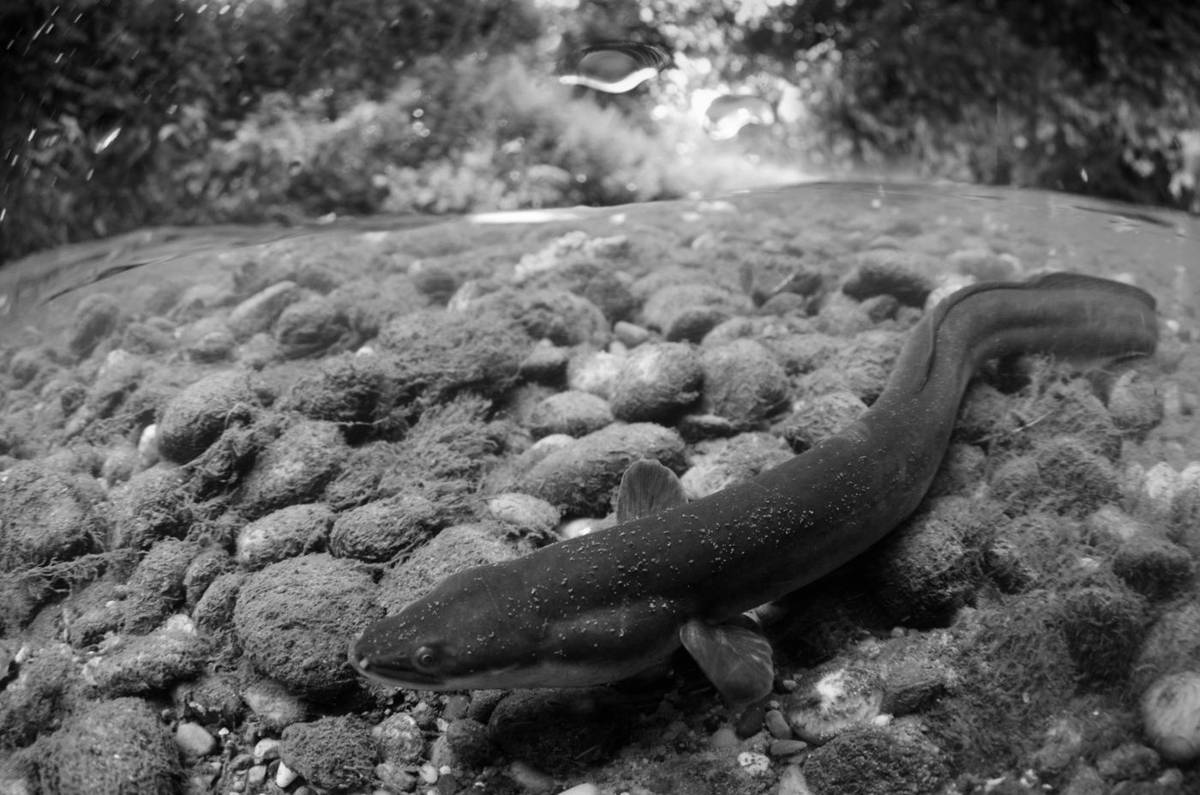
Eel resting on a bed of pebbles underwater
Fig.4. (Unlocking the Severn, 2020; photograph: Jack Perks)

Ecological importance

Eels have historically made up to 50% of fish biomass in some European freshwater systems. Juveniles are a key high-fat food for otters, ospreys, bitterns and herons. Adults clean waterways and regulate invertebrates, molluscs and crustaceans. They are one of very few species that physically connect deep-sea and freshwater ecosystems.

As long-lived bottom-dwellers at the top of the food chain, they are precise indicators of ecosystem health. Their tissue accumulates decades of heavy metals, PCBs and pharmaceuticals, including cocaine measurable in Thames water. Their absence is equally telling.

Threats

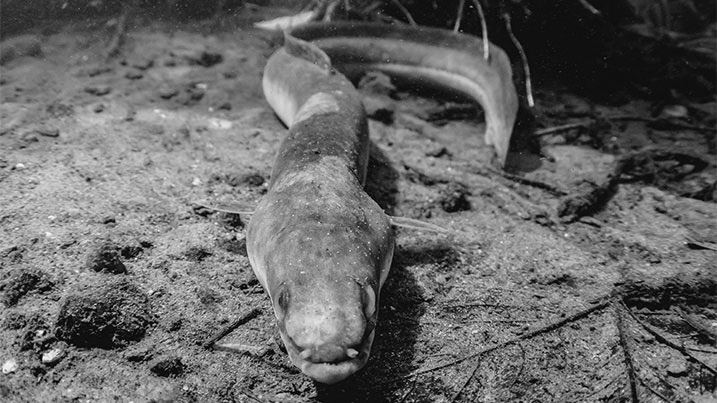
Eel lying on sandy river bed looking toward the camera
Fig.5. (WWT, 2025)
Canalisation · 1760–1960

A single weir blocks an entire cohort

Even a 30 cm weir blocks access to many kilometres of productive habitat. The juvenile eel follows upstream currents and has no instinct to turn back at a barrier.

III.Canalisation & eel laddersThames · Severn · Trent

The Industrial Revolution cut the corridor

Until the late eighteenth century, England’s rivers meandered across floodplains, connecting wetlands and giving migratory species continuous aquatic corridors. In about two centuries, the Thames, Severn and Trent were straightened, embanked and fitted with locks, weirs and sluices to move coal, raw materials and produce. New canals such as the Bridgewater and the Regent’s were cut through the landscape.

Pumps and turbines installed without screening cause significant mortality. The loss of floodplains removed the sheltered, complex habitats of mud, vegetation and crevices that eels depend on through their long freshwater residence.

There is a historical irony: some canals, by creating slow sheltered water, became eel-rich and supported eel fisheries well into the twentieth century, with Dutch barges arriving at London docks full of live eels. Still, the net effect was severe, and its legacy of thousands of unmitigated barriers persists.

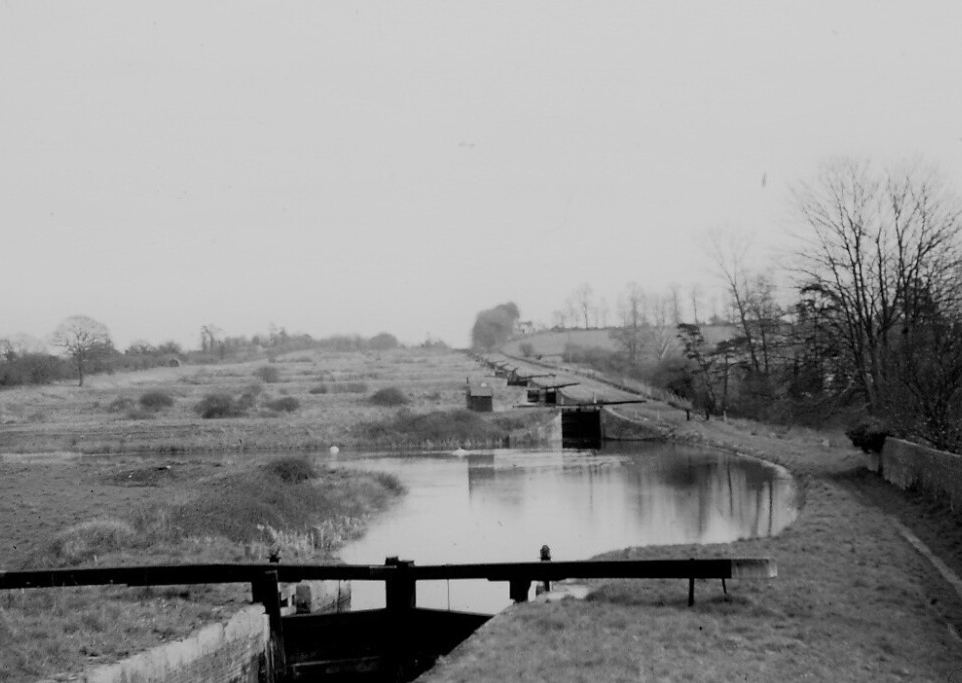
Historic photograph of a straightened canal and lock
Fig.6. (The History Press, 2024)

Physical barriers

Weirs, locks and sluices are a hard obstacle elvers cannot pass.

Habitat simplification

Straight channels lose backwaters, margins and muddy shelter.

Flow regulation

Uniform flow alters migration cues, oxygen and habitat diversity.

Water quality

Canal networks brought heavy metals that build up in eel tissue.

Eel passes today

Eel-specific passes appeared in the 1970s and 1980s in France, the Netherlands and parts of the UK. Earlier fish passes were built for salmon and trout and were largely useless for eels. After the EU Eel Regulation (2007), the Environment Agency has installed more on the Thames, Severn and other catchments.

Limitations of current designs

  • Uniform surface texture
  • Rigid, non-modular construction
  • Blockage from debris and sediment
  • Poor grip in varying conditions
  • Dependence on precise water flow
  • Material degradation over time
Eel pass channel clogged with leaves
Conventional eel pass with nylon bristle clumps
Worn plastic bristle board

Fig.7. Existing eel passes. Centre (Naturepl.com, 2020).

“Everybody’s come down, great, we’ve got a new eel pass on this barrier for the first time in 100 years. And then that’s it. It’s left. And 10 years later … it’s completely ruined, filled up with silt.”
Eel Expert 2 · interview, 2025
IV.The materialWaste shell ceramic

A ceramic that gets stronger in water

A shell ceramic made entirely from waste and invasive biological material, drawing on the same principles as Roman concrete and 17th-century tabby.

The embodied carbon of the mix is far lower than conventional concrete. The aim was always a material that is better for the planet, better for the eels and better for London’s rivers.

Waste shell+reclaimed mineral→strength that grows in water
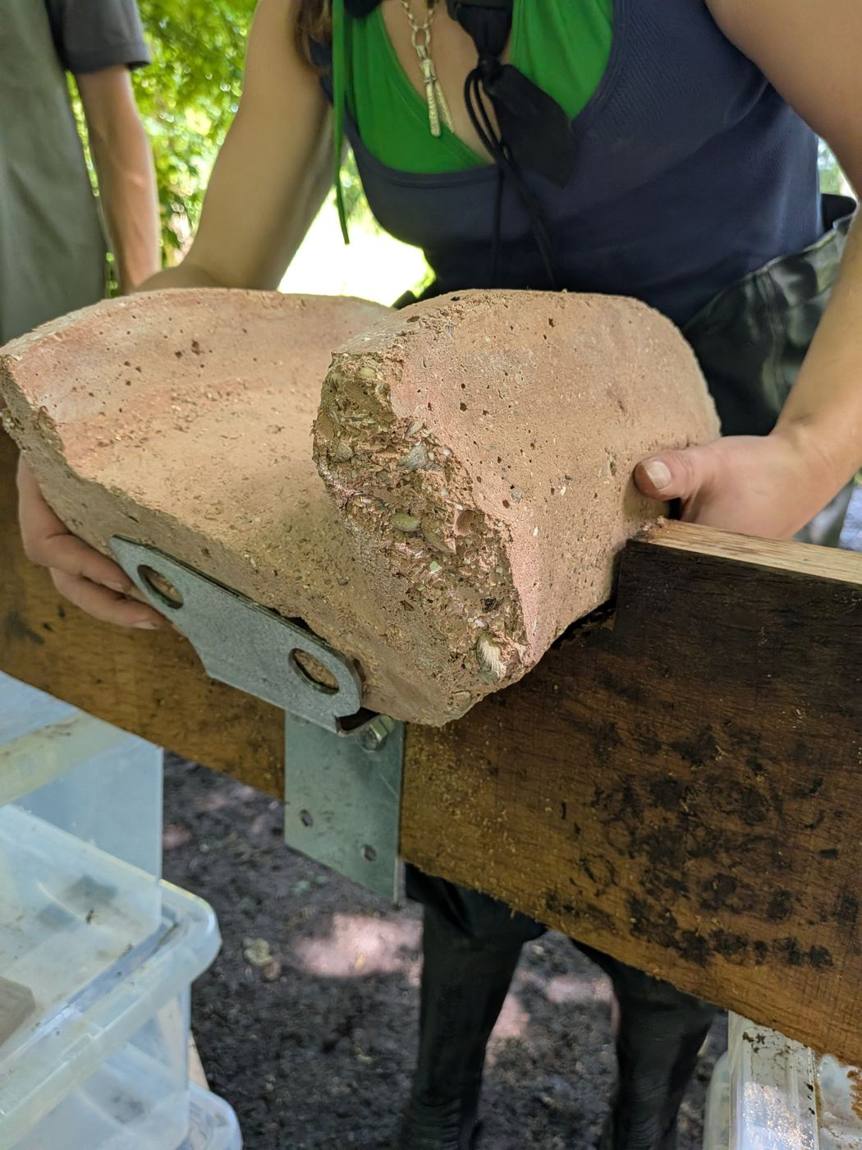
Close-up of a pink shell-ceramic brick, its broken face full of crushed mussel shell
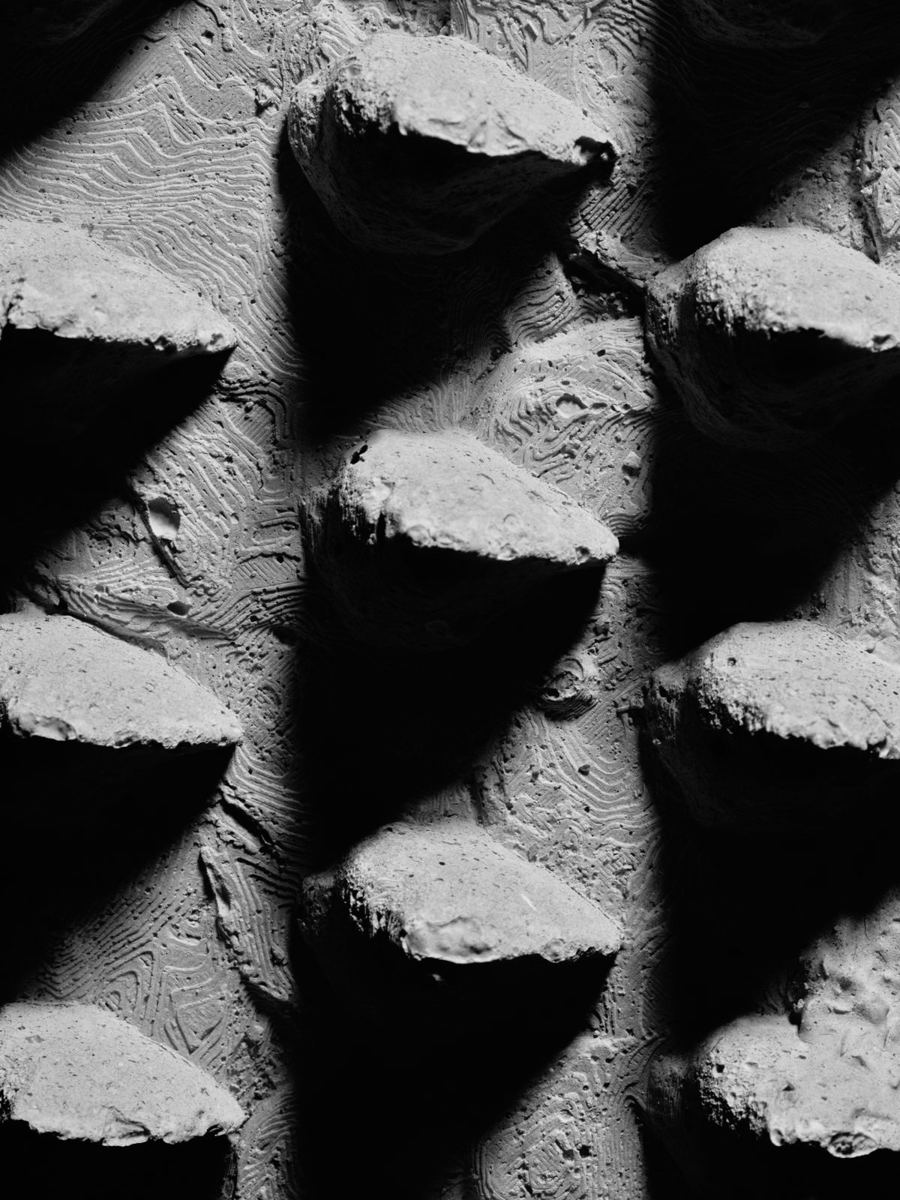
Fig.8. Shell ceramic brick. The fractured face shows the mussel shell aggregate.

Composition

Plates I–IV · select a plate

Gains strength in water

The material keeps hardening long after it is installed in the river.

Self-healing

Fine cracks can close up on their own over time.

River-compatible

Its chemistry sits close to the minerals already found in river water, with negligible risk to river life.

Bio-receptive

Shell grit encourages biofilm and algae. The structure naturalises, improving grip for eels.

Historical precedent: tabby & Roman concrete

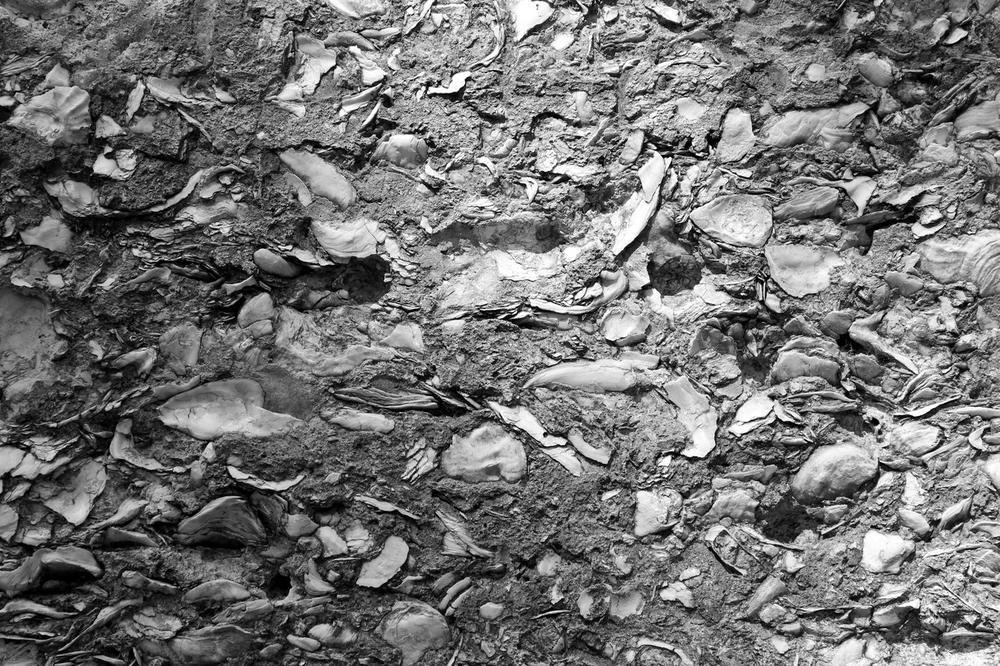
Tabby is a shell-lime concrete used in coastal American building from the seventeenth century, particularly in the Carolinas and Georgia. Burnt mollusc shell makes the lime, mixed with whole shell as aggregate and water. Many examples remain sound after three hundred years of tidal flooding, salt spray and cycles of wet and dry.

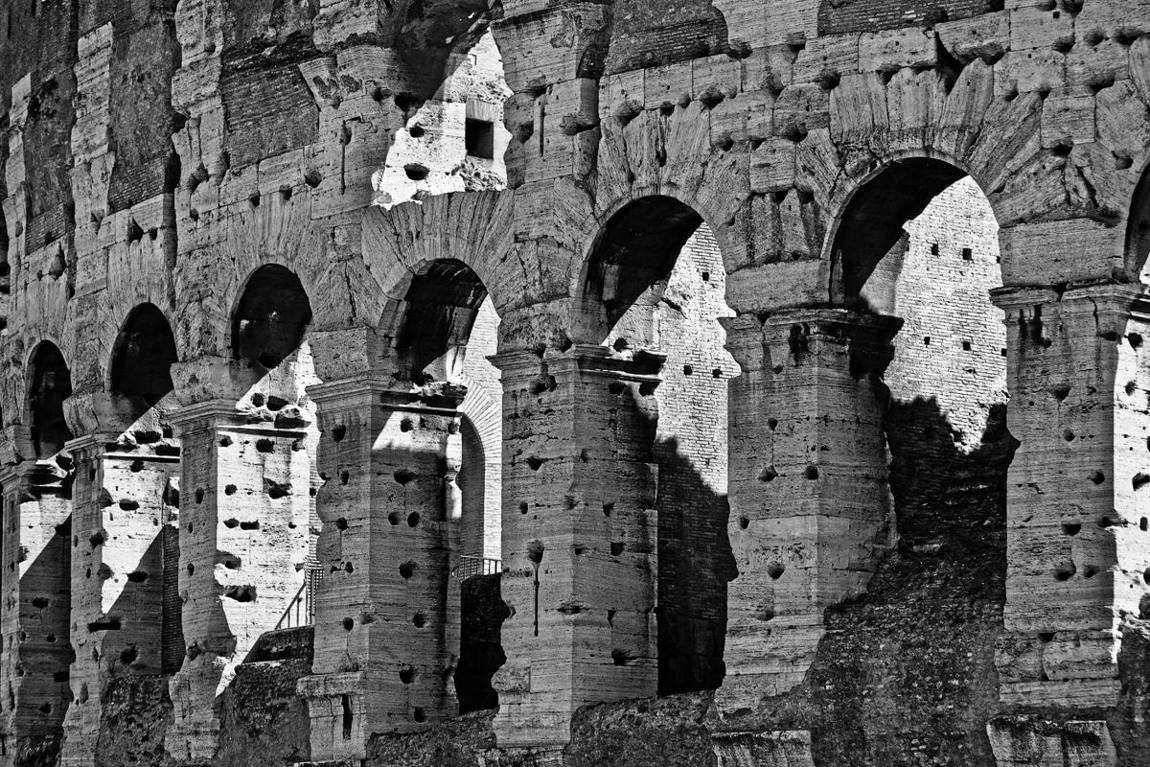
Roman concrete (opus caementicium) worked on similar principles, with volcanic ash as pozzolan and seawater as activator, and has survived for two millennia. This project applies the same proven principle, with local waste materials, to a new ecological problem.

Roman concrete arches
Historic tabby wall with embedded shells

Fig.9. Roman concrete and tabby. Left (Dhull, 2025; photograph: Steve Lovegrove/Shutterstock). Right (Idowu, 2024).

Eel Expert 3 · interview, 2025

Eels do not swim up ladders. They climb them.

“Really very poor swimmers” who “rely on crawling far more than they do swimming”. The tile is built around that crawl.

V.The designClimbing tile · modular ladder

The climbing tile

Biomimetic surface design

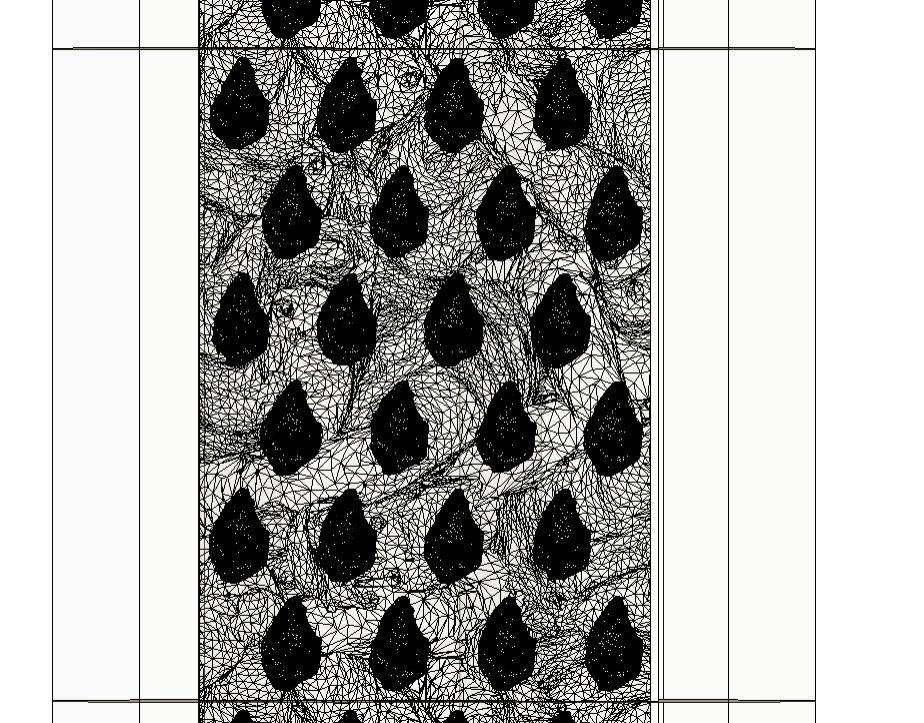
Conventional eel passes fix uniform plastic bristle boards to a generic channel. This tile is cast from 3D scans of oyster shells, digitally layered into a surface that resembles what eels have evolved to climb: wet grass, root mats, gravel beds, the rough underside of stones.

On top sit oyster-form studs set in a quincunx, a staggered grid like the five-spot on a die. Unlike cylindrical plastic studs, the organic forms give varied contact angles. The result is a multi-scale friction system: texture from the shell grit, grip from the studs.

a

ScanPatternPlanChannelCastRiver
Conventional plastic bristle eel pass Shell ceramic tile with oyster-form studs
Shell tileConventional

Fig.10. Drag to compare the shell tile with a conventional bristle board.

Tile comparison

PropertyConventionalThis design
Surface textureUniform bristle/stud3D-scanned shell geometry
Stud formCylindricalOyster-form, organic
Stud arrangementQuincunx (staggered)Quincunx (staggered)
Contact anglesSingle (uniform)Multiple (varied)
Base materialPolymer boardShell ceramic
Embodied carbonHighLow, waste inputs
Bio-receptiveNoYes, colonisable
Self-healingNoYes

The water film

The tile works under a continuous film about 2–3 mm deep: wet enough to keep the surface slick with water, shallow enough that the eel keeps contact. The most common failure in eel passes is one that runs dry in the summer migration season. “Everyone’s got a high and dry eel pass that they’re not proud of.” The gravity-fed crest removes that risk.

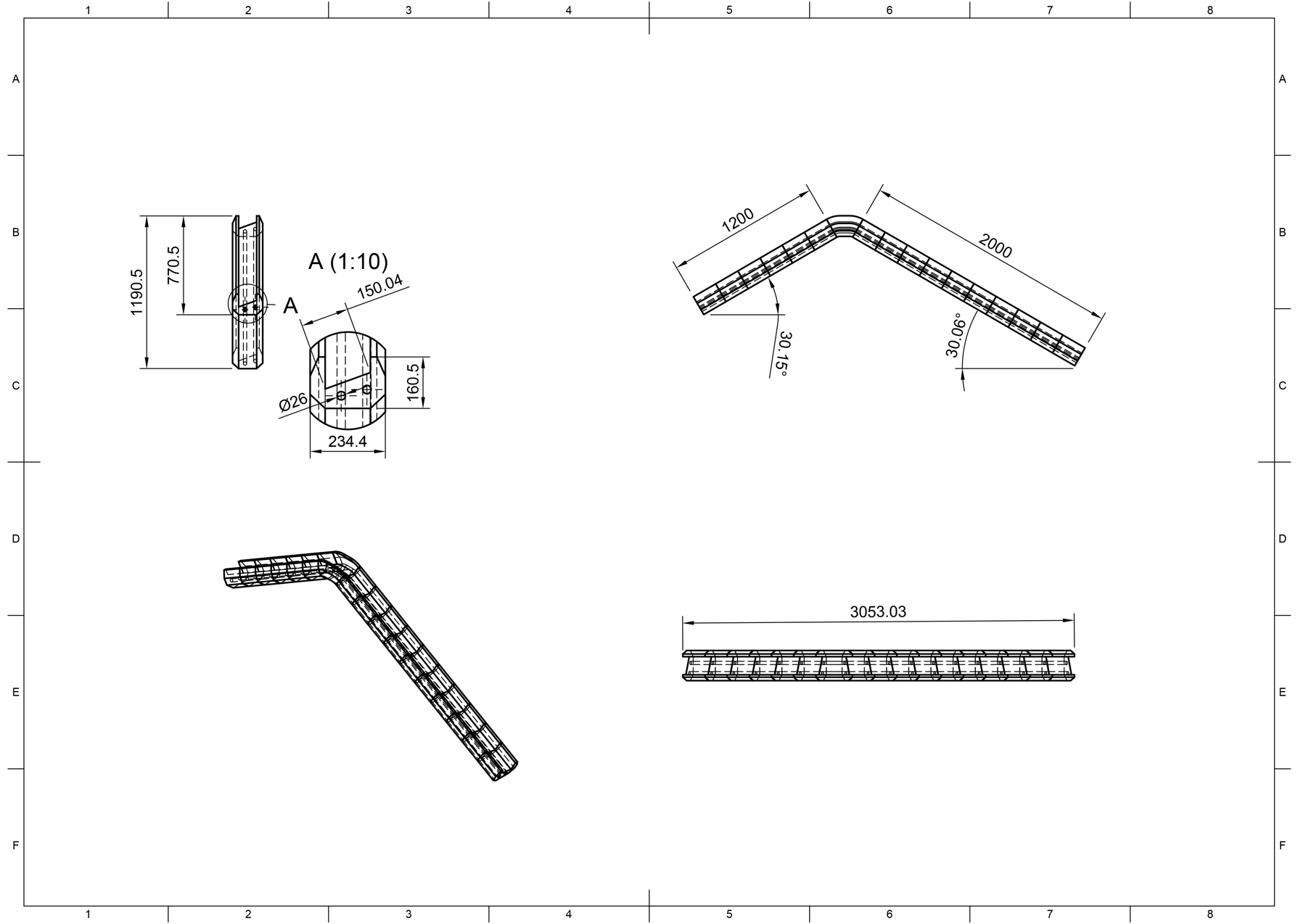
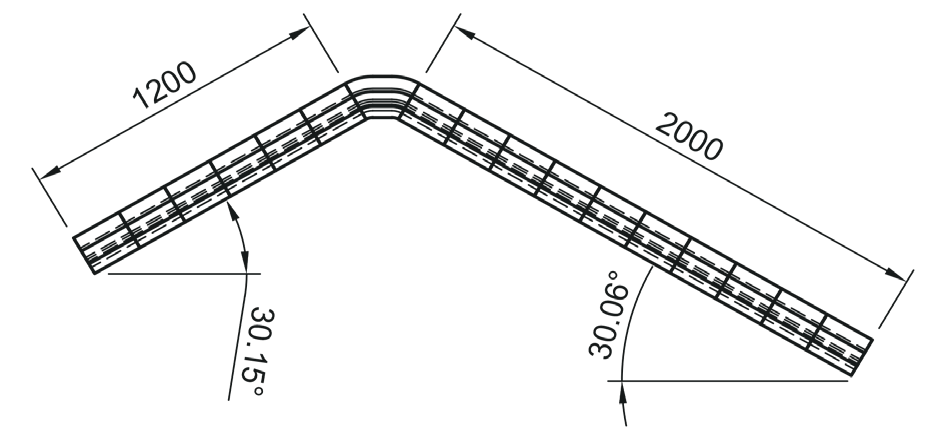
General arrangement drawing of the eel bridge: tile plan and sections, brick unit, and the assembled ladder with 1200 and 2000 mm sections at about 30 degrees

Fig.11. General arrangement drawing of the eel bridge.

The modular ladder body

Set a weir height

Side view of the modular ladder set at 30 degrees against a weir
50 cm weir
Weir height
0.50 m
Ladder on slope
1.00 m
Brick units
5

At a 30° incline the climb is twice as long as the weir is high. The figure and calculations cover the downstream climb only, up to the crest brick (half shown), which carries the ladder over the weir; the upstream water sits about three-quarters of the way up the crest brick. Unit count uses the 200 mm brick length. The Wandle step weir is about half a metre.

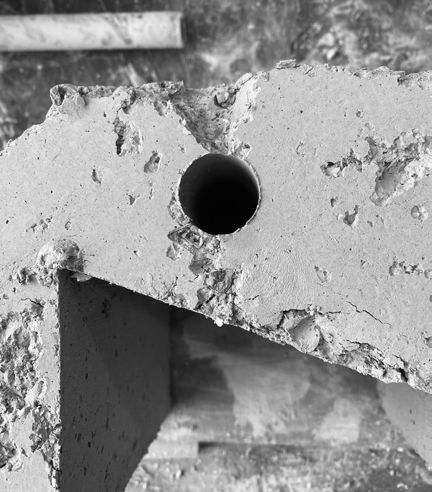
Each brick unit is 160 × 234 × 200 mm, cast from the same shell ceramic as the tiles, so no two materials fail against each other in the wet. An inlay holds the tile at 20° from horizontal. Two 1-inch voids run through each unit, and on site the bricks thread onto parallel steel rails without specialist tools. The crest sits at water level, so the system is gravity-fed.

Unit dimensions160 × 234 × 200 mm
Tile angle20° from horizontal
Overall incline30°
Water film depth~2–3 mm
Rail voids1-inch diameter × 2 per unit
Fixing systemSteel rod rails, 1-inch
AssemblyThread-on; no specialist tools

Advantages

  • Gravity-fed: no pumps, no moving parts
  • Adaptable length: weirs from 20 cm to any height
  • Field-replaceable units, no dismantling
  • Single-material system, no interface failure
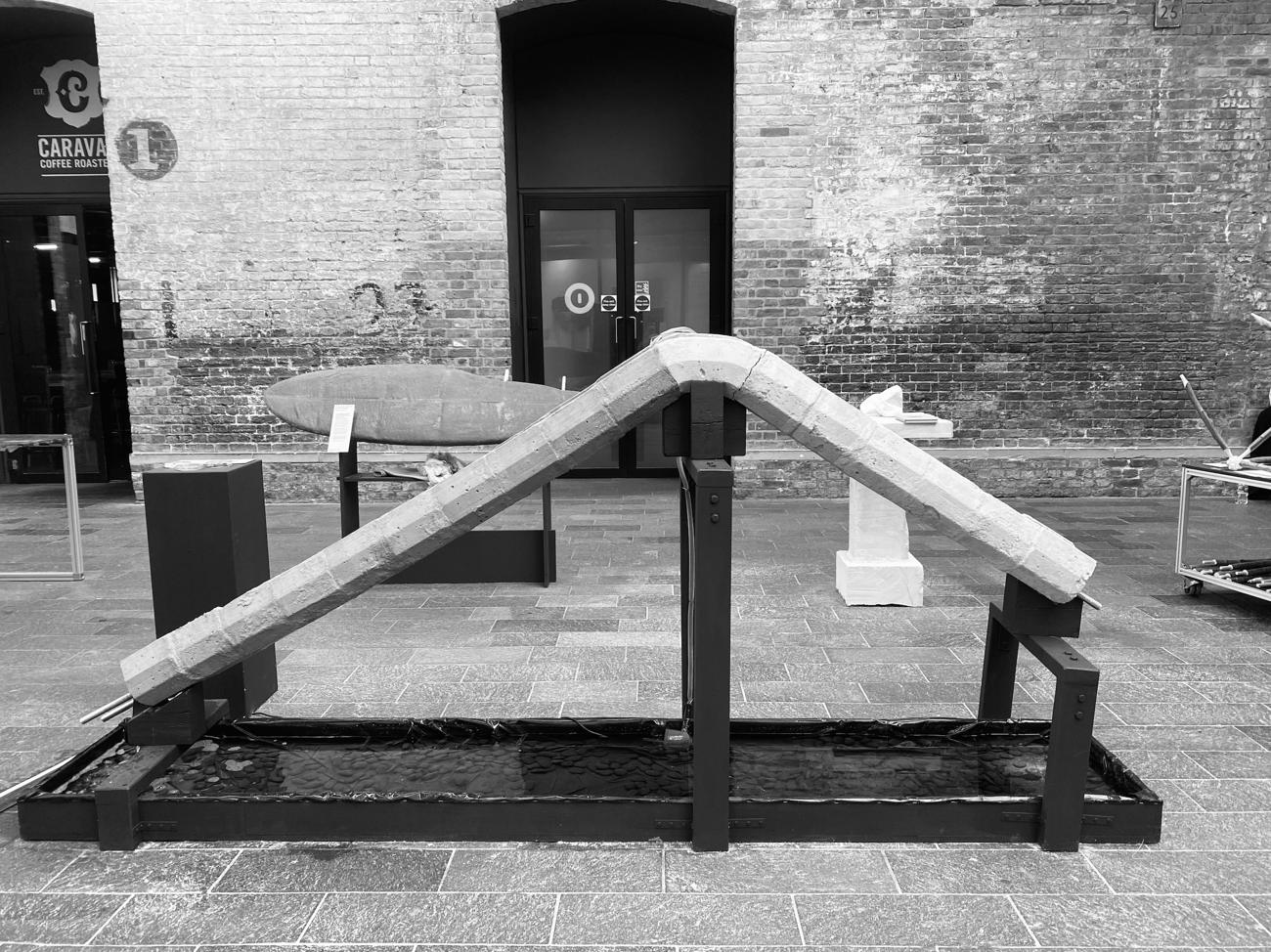
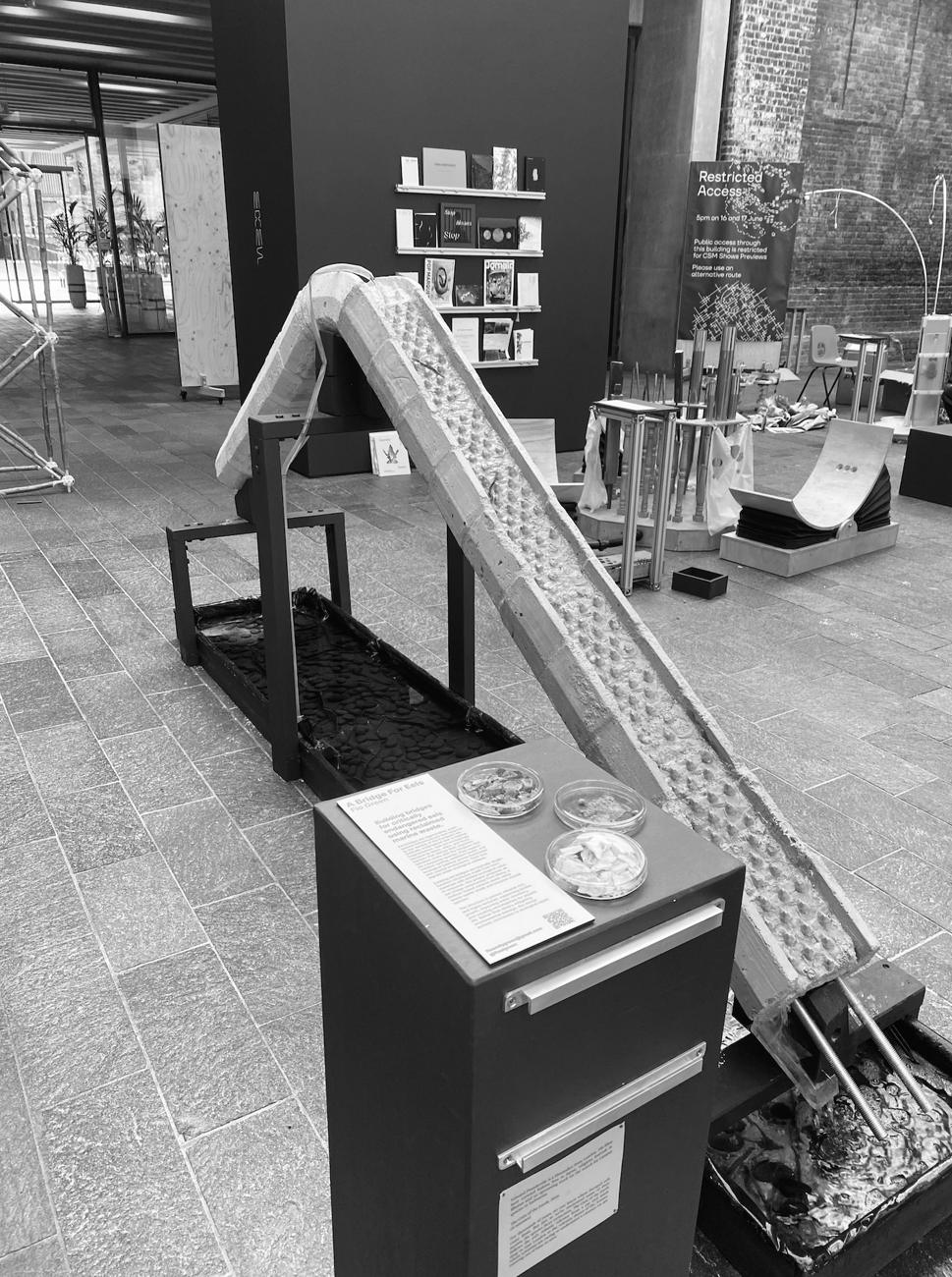
The full-scale eel bridge on its black steel stand at the Material Futures graduate exhibition The bridge from the side, with the studded tile channel running down into the tray of pebbles

Fig.12. The full-scale bridge at the Material Futures exhibition, Central Saint Martins.

Material Futures exhibition

A full-scale model was built for the graduate showcase, with water pumped over the surface continuously for five days to test erosion. Beyond the initial wash-off from the build, no further sediment loss was recorded.

VI.Site installation · River Wandle23 June 2026

23 June 2026 · River Wandle

Morden Hall Park

3 people · 4 hours · no specialist equipment

Piloted on the step weir at Morden Hall Park, under Environment Agency exemptions and National Trust permission.

Once one of Britain’s most polluted rivers, the Wandle now supports brown trout, kingfishers and recovering European eels. It was the South East Rivers Trust’s very first river. Multiple weirs still restrict upstream migration. The step weir is about half a metre high, well within the ladder’s range, and the National Trust’s stewardship makes long-term monitoring realistic.

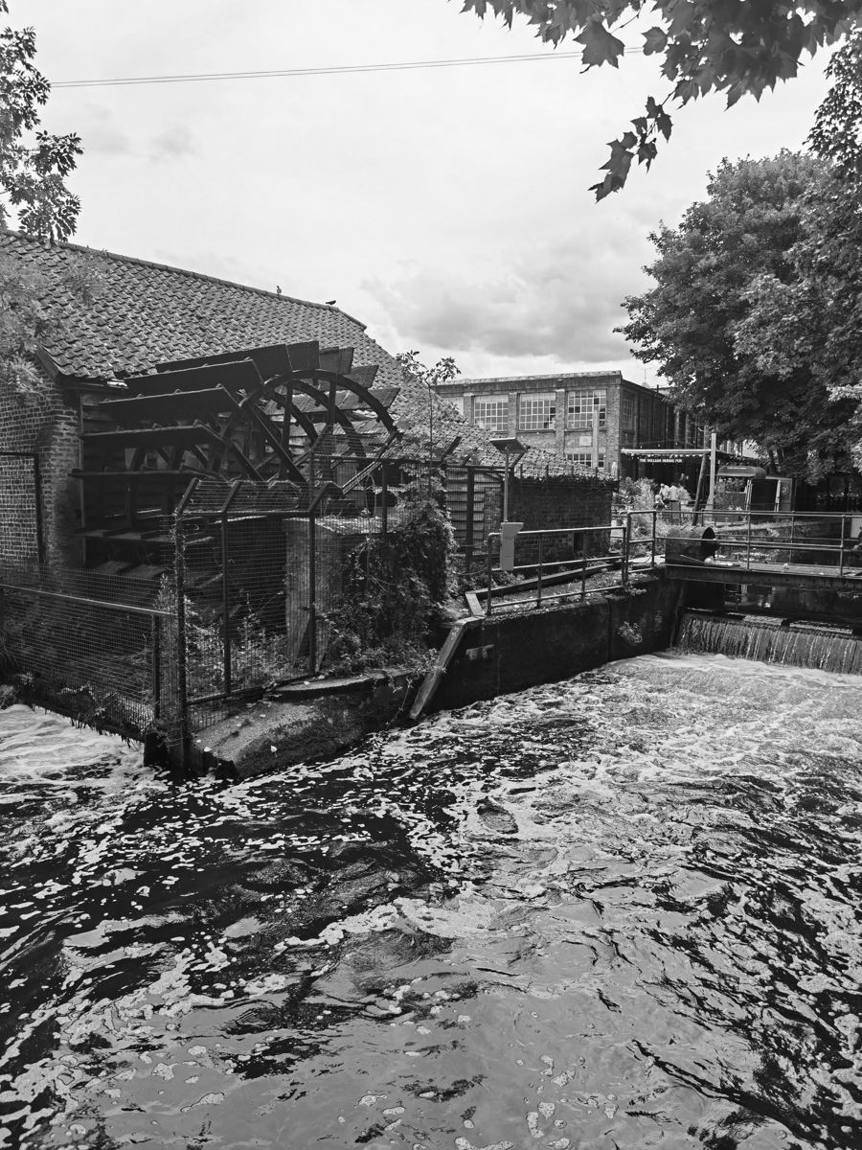
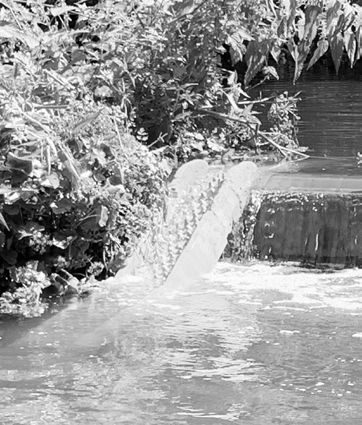
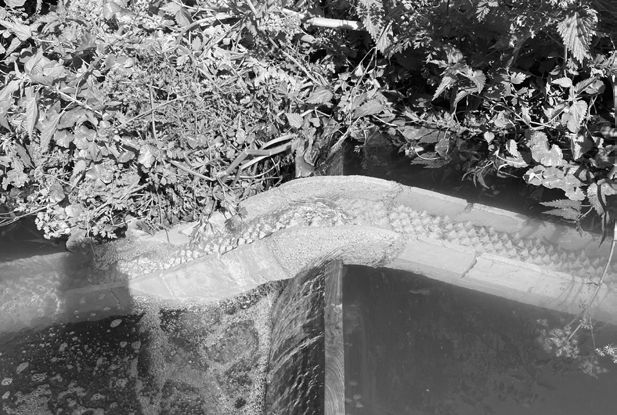
Fig.13. The eel bridge running on the step weir, Morden Hall Park.

Assembly process

1

Kit of parts

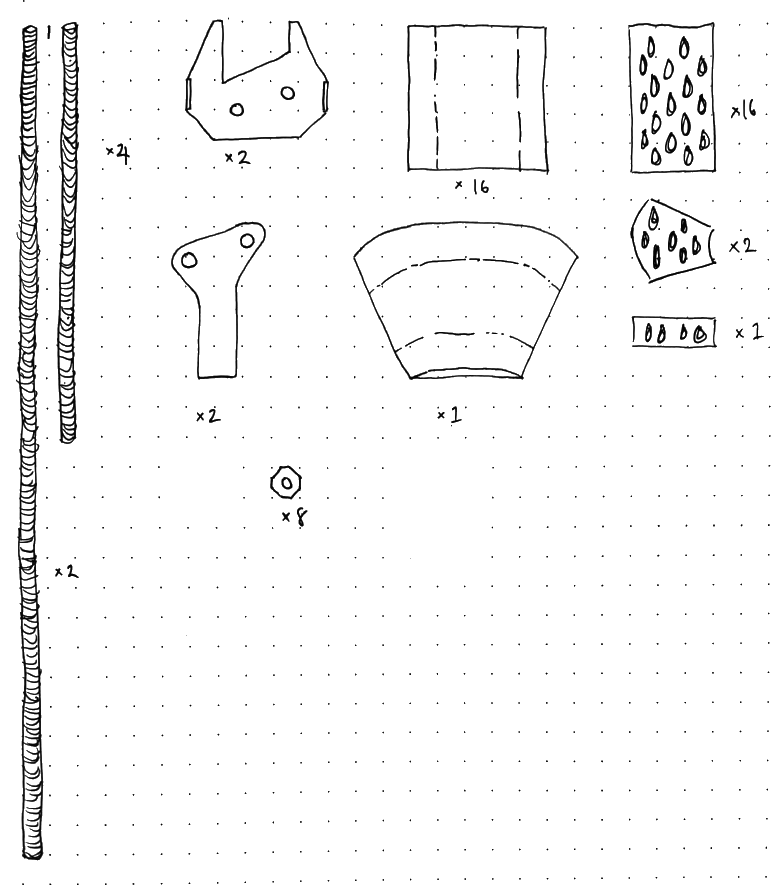
Everything that went into the river, drawn by hand before the install. Hover over (or tap) a piece to see what it is.

  • 2m steel rods
  • 1m steel rods
  • Base plates
  • Standard bricks
  • Standard tiles
  • Crest support plates
  • Crest brick
  • Crest curved tiles
  • Crest top tile
  • Nuts

Fig.14. Installation ingredients.

Hand sketch of the kit of parts

The day

08:00

The team arrives to find the weir completely submerged. Overnight flooding has raised the river until the weir has disappeared.

Waiting

A couple of hours for the river to recede. Bricks, tiles and wool padding are unpacked on the bank and dry-fitted.

4 hours

Once the weir is visible, everything comes together smoothly. No further mishaps.

Done

For a first installation of a prototype modular system in a live river, it could not have gone better.

The installed eel bridge

Fig.15. The finished eel bridge on the step weir, Morden Hall Park.

On the day

Photography by Ammar Jiman, with special thanks

Site context

Morden Hall Park is owned and managed by the National Trust, giving long-term stewardship for monitoring and maintenance.

Regulatory context

Authorised under Environment Agency exemptions 19 and 20, with the Environment Agency giving technical guidance throughout the design.

Performance

The ladder works well, thanks to the tile surface and controlled slopes. The material keeps hardening. Park rangers check it regularly and it is in good condition.

VII.IOZ flume trialsInstitute of Zoology (ZSL)
Flume camera · July 2026
0:00 0:00
Speed
Fig.16. Eel footage from the IOZ (ZSL) substrate test flume, July 2026, shown sped up 20×.

Live eels on the shell tile

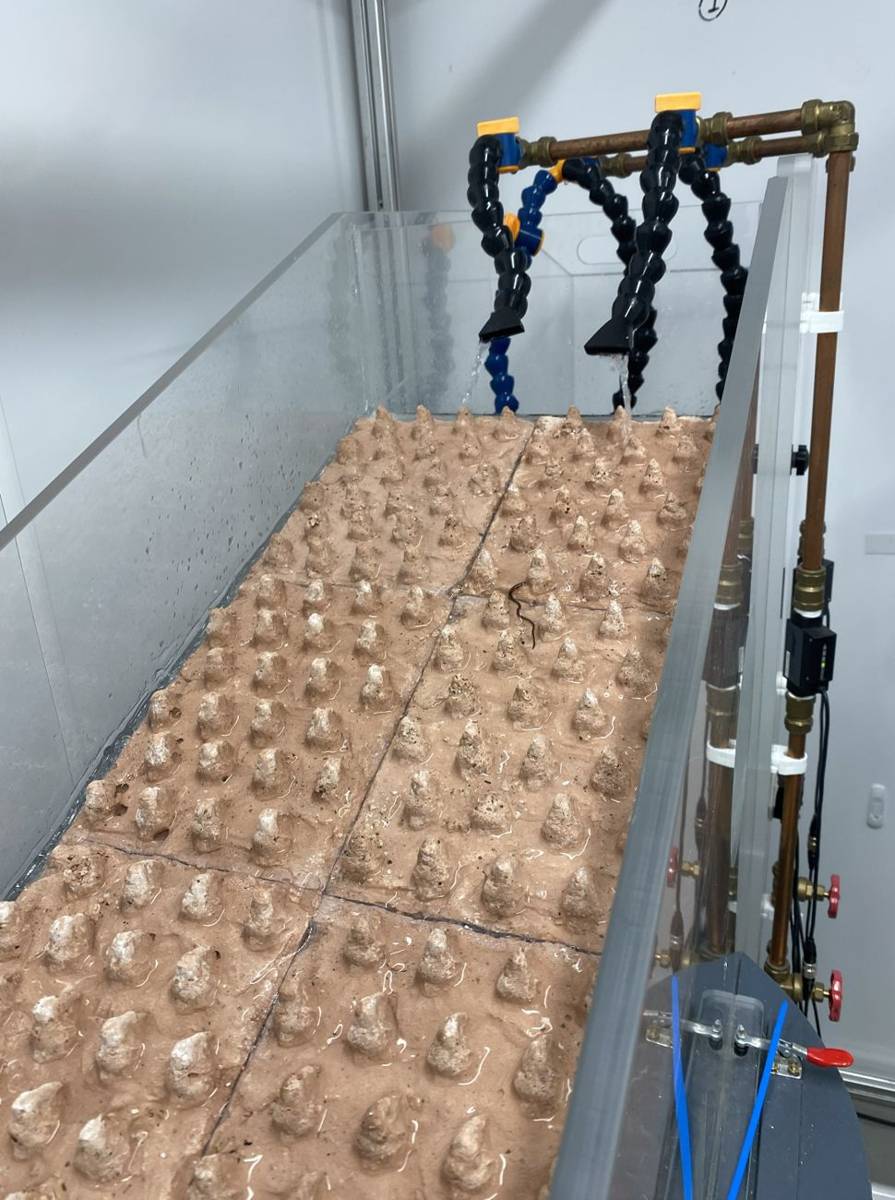
In early July the ceramic tiles went into the Institute of Zoology’s substrate test flumes, with the Environment Agency. Five trials of two hours each were fully video recorded. Eels were observed traversing to the top of the ramp during trial time.

With thanks to Adam Piper, Chris Sergeant and Darryl Clifton-Dey · Institute of Zoology · Fish Movement Ecology Group · Environment Agency

The IOZ test flume: shell ceramic tiles on the ramp with water fed from above, and a young eel climbing A young eel climbing between the oyster-form studs where two tiles meet Close-up of a young eel winding between the studs under the water film

Fig.17–19. Shell ceramic eel tiles in the IOZ substrate test flume: the rig, and a young eel climbing between the studs.

5
Trials
2h
Per trial
10
Eels per trial
10h
Recorded
3
Days

Trial data · 50 eels

Length of every eel, by trial · hover a dot, select a trial

50–72mm
Length range · mean 63.3 mm
0.10–0.53g
Weight range · mean 0.22 g (trials 2–5)
16.9–18.4°C
Water temperature, in and out
1–3Jul
Trial dates, 2026
Strip chart of eel lengths in millimetres for each of the five trials, 10 eels per trial

Conditions

* No visually discernible difference between 0.0 and 0.9 flow rate. Weights were not recorded for trial 1, and its times are to be confirmed from video. Source: European Eel Tile Trials data sheet, July 2026.

Time to cross a tile

Measured from the flume footage · 10 tiles in the flume

1 min 14 smedian
Fastest climb35 s per tile
Typical range54 s – 1 min 27 s
Mean (all 9)1 min 33 s
Whole ramp at median pace≈ 12 min for 10 tiles
Climbs measured9
Dot plot of time taken to cross one tile for nine measured climbs, from 35 seconds to 4 minutes 15 seconds, median 1 minute 14 seconds

How this was measured: eels were tracked automatically in the overhead footage from both flume cameras. The film is a 20× time-lapse, checked against the camera clock. Each climb that covered at least three-quarters of a tile, seam to seam, was timed and scaled to one full tile. These are estimates for climbing eels on camera, not per-eel records; the slowest climb (4 min 15 s) includes a long rest between studs.

VIII.Development programIn order of dependency

If this continues…

The Wandle installation is the first act of a longer programme. With funding, the priority is to move from prototype to a validated, scalable system.

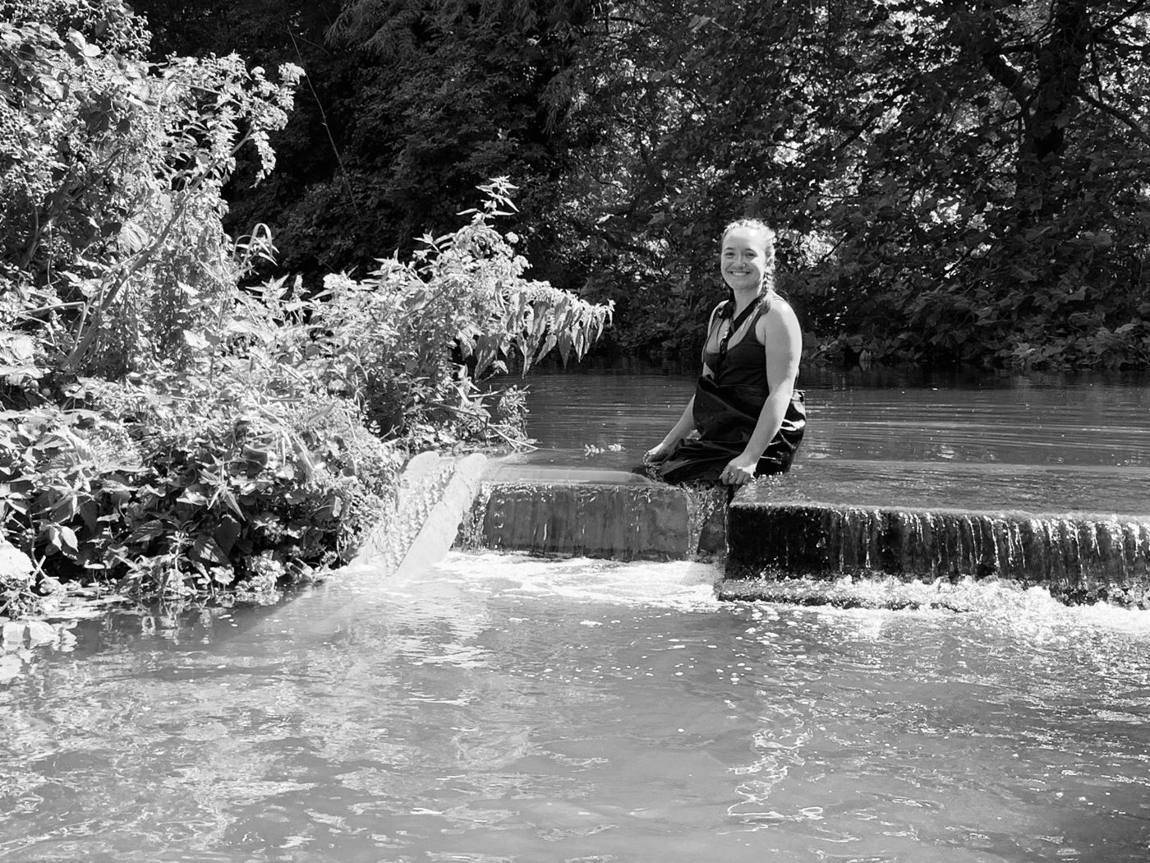
Sitting on the weir beside the installed eel bridge, smiling
Fig.20. On the step weir, Morden Hall Park.

The European eel is critically endangered because the systems built around it were never designed with it in mind. Roads, weirs, canals and locks were built for human purposes, with no thought for the animals whose routes they severed.

Eel Expert 5 put the aim simply: “if you do it by beauty, you get much more of a message over than horrifying people.” This project agrees. It offers more than a retrofit: infrastructure that is materially honest about what it is made from, where it sits and what it is asked to do.

Not engineered against the river, grown from it. A bridge, for eels.

Thank you

Supervisor & mentorDarryl Clifton-Dey. This project would not have been possible without you.

Morden Hall ParkIsabel Bryan, for making the installation possible.

Institute of ZoologyAdam Piper and Chris Sergeant, for the test flumes at IOZ.

ShellsAlex Collington & Michael Chipps at Thames Water; Shai & Quincy Young at Oyster Shack.

Family & friendsRachel Liebling, Molly Green, Cynthia Liebling, Henry Liebling, Kai Gillespie, Tallulah Trudgeon, Frankie Brown, Misty Scrimgeour, India Smith, Blythe Walker Sibthorpe

MAMFVibuthi Amin, Scarlett Beales-Guy, Josie Blundell, Shannon Daly, Javi Durango, Polina Goldobina, Weixi Kuang, Antoine Léger, Marieta Papazyan, Fraser Pearston, Daisy Halliwell

MAMF facultyMael Henaff, Agi Haines, Alara Sipahioglu, Melanie Davies, Chloe Griffith, Charlie Bridge

CSM technicians & facilitiesCharlie, Nicky, Ricky, Billy, Barbara, Paula, Eva, Ece, Dom, Mark, Dev Jatana, Wana, Erik

AdvisorsZany Kayden, Lynnden Samuel, Edward Prendeville, Joe Pecorelli, Andrew Don, Stephen Llewellyn, Andrew Kerr, Vanessa Becker-Hughes, Julia Manning, Angus Monaghan, Christopher Grzesiok, Tarun Ingvorsen, Isobel Ollard, Bud Moore, Judith Van Den Boom

OrganisationsEnvironment Agency · National Trust at Morden Hall Park · Institute of Zoology (ZSL) · Fish Movement Ecology Group · South East Rivers Trust · Thames Water · Canal and River Trust · Sustainable Eel Group · Somerset Eel Recovery Project

References